Category: Firearms

  • Savage 110 .300 win mag

    I purchased a Savage 110 at the 2025 Fall Tulsa Gun Show for $750. I have recently started using it as a PRS and a hunting rifle, this is my review.

    The bolt is fairly smooth but can sometimes be a bit hard to cycle. The mag also sometimes has issues feeding but these are few and far between.

    As for accuracy I have had great results at ranges out to 800 yards, for long range shooting I generally recommend not loading the mag and just putting a single round in the action, this is just because you won’t have to yank the bolt as hard so you are less likely to lose your target in the scope.

    I have not used it yet for hunting but I will be using it next deer season.

    Compared to other .300 win mags it is fairly light but front heavy, I am surprised at how easily it can be shouldered.

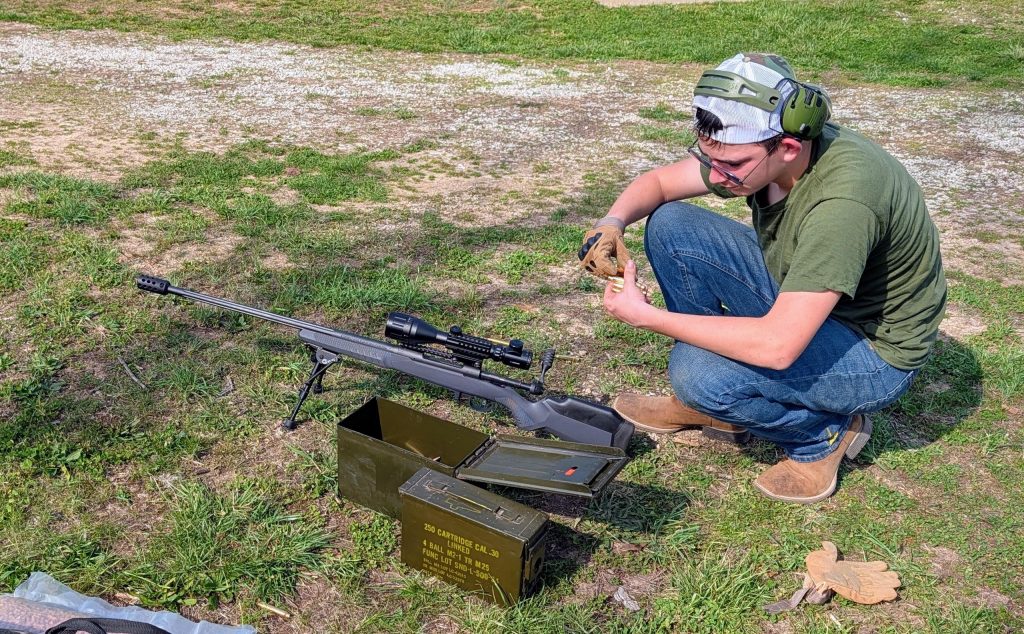
    This is me with my rifle.

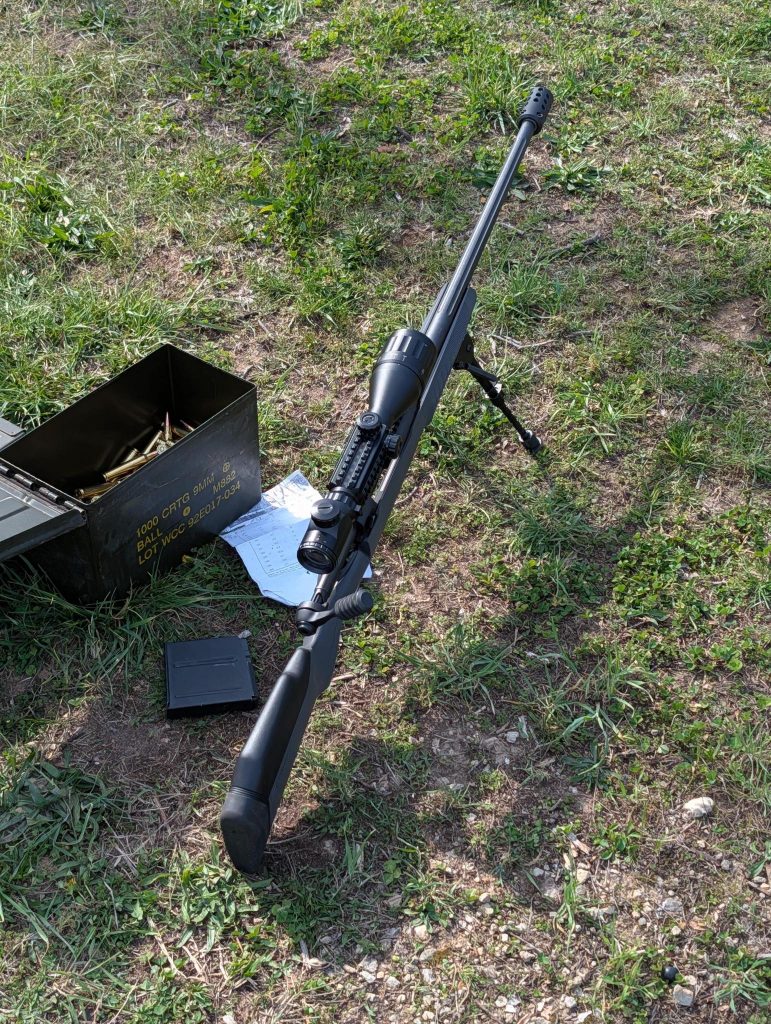
    Here’s a better picture of just the rifle and dope card.

  • My dream AR-15

    Many people have specific rifles they love, and I really like the AR platform. It is very versatile and easy to use.

    My dream AR-15 would feature an 18-inch barrel, a flip-to-side thermal, a bipod, an Arizona Regulator force reset trigger with a three-position selector, a 1-10x scope, a three-point sling, an effective suppressor, and a forward grip. I would also want it painted with black, green, and tan paint for style and to be more effective at concealment if I ever needed to blend into brush.

    Reasons for These Choices

    18-Inch Barrel

    I prefer the 18-inch barrel because I generally engage at farther distances. I have also carried different barrel lengths through brush and in my opinion an 18-inch barrel isn’t much worse than a 16-inch barrel in that regard.

    Flip-to-Side Thermal

    I like thermals because most of the time when I carry a rifle I am in brushy areas where acquiring targets can be difficult, and the thermal assists with that and makes it much easier.

    Bipod

    I like bipods because most of the time I shoot from prone, as it is the most stable position, so I don’t waste ammo.

    Force Reset Trigger

    This somewhat counteracts what I just said about not wasting ammo, but I do have a reason. The FRT comes with a three-position selector switch, meaning I can fire semi-auto or FRT mode, so I’m not always dumping rounds. I want one because if I’m walking through the woods and come across a hog, bear, or other threat, I can mag dump and hopefully neutralize it quickly.

    1-10x Optic

    I want a 1-10x optic because, as I mentioned, I normally engage at longer distances such as in fields, but I also operate in brush. The 1-5x range is helpful up close while the 5-10x range is effective out to 500 yards or more.

    Three-Point Sling

    Fairly self-explanatory, but I prefer the three-point over a two-point because I can more easily wrap my arm through it and use it as a brace.

    Suppressor

    The suppressor makes it less likely to spook animals and makes it harder for people to locate where a shot came from. It also makes ear protection more effective.

    Forward Grip

    The forward grip makes FRT mode easier to control, which means more rounds on target and fewer rounds wasted.

    Paint
    I just prefer painted guns and if I was attempting to conceal myself it would make the gun stick out less.

    Conclusion

    This is my dream AR setup, thanks for reading!


  • Sighting in a rifle

    I generally sight my rifles at 100 yards, but I recommend researching what range you should zero your specific rifle at, as it can vary depending on the caliber and intended use.

    First, set your rifle up on a sturdy platform using a bench rest. Fire 3 rounds at a marked point on your target, if you’re using a metal target, spray paint a dot on it and aim at that dot. Note: Do not shoot metal targets at distances under 100 yards due to the risk of spall (bullet fragmentation bouncing back toward the shooter).

    After firing your 3 rounds, either use a spotting scope to check your impacts from the bench, or walk down to the target and inspect them directly. I personally prefer walking to the target.

    Next, adjust your scope or iron sights left or right based on where your shots landed relative to your point of aim. A helpful reminder on scope adjustments: the top dial controls up/down, and the side dial control on the right is left/right. After making your adjustment, fire one round and repeat the process until your shots are lined up correctly left to right.

    Once your left/right is zeroed, move on to your up/down adjustment. The process is exactly the same, adjust, fire one round, check, and repeat until your point of impact matches your point of aim.

    Once both your left/right and up/down are zeroed, you’re all set. Get out there, have fun, and be safe!

  • Range estimation

    Range Estimation Using a Known Distance

    One of the simplest and most reliable ways to estimate range is to use a distance you already know by heart.

    The Method

    Start by finding a place you’re deeply familiar with somewhere you’ve walked or observed so many times that you can picture it effortlessly. Make sure it is approximately 100 yards. This becomes your mental ruler.

    How to Use It

    When you need to estimate how far away a target is, don’t try to judge the whole distance at once. Instead, mentally “lay” that familiar 100-yard stretch between you and the target, end to end, and count how many times it fits. Two lengths? That’s 200 yards. Five lengths? 500 yards.

    Tips for Getting It Right

    • Choose a reference location you visit often, like a backyard, a field, or a familiar street.
    • Practice regularly by estimating distances and then pacing them off to check your accuracy.
    • Keep in mind that distances tend to look shorter going downhill and longer in poor light or dense terrain — adjust accordingly.

    This has worked very well for me for hunting and target shooting, keep in mind this is guestimation and not exact so there is a chance you are off by 1-10 yards but it has worked well for me when I am hunting and target shooting. It is more precise using a rangefinder (Duh), but if you don’t have a rangefinder this works well enough.